



Pacific Nations Cup history
Number of tournaments: 17
Best finish: Champions (2013, 2015-18, 2024-25)
Most points in a match: 63 (63-10 v Canada, 2025)
Biggest win: 53 (63-10 v Canada, 2025)
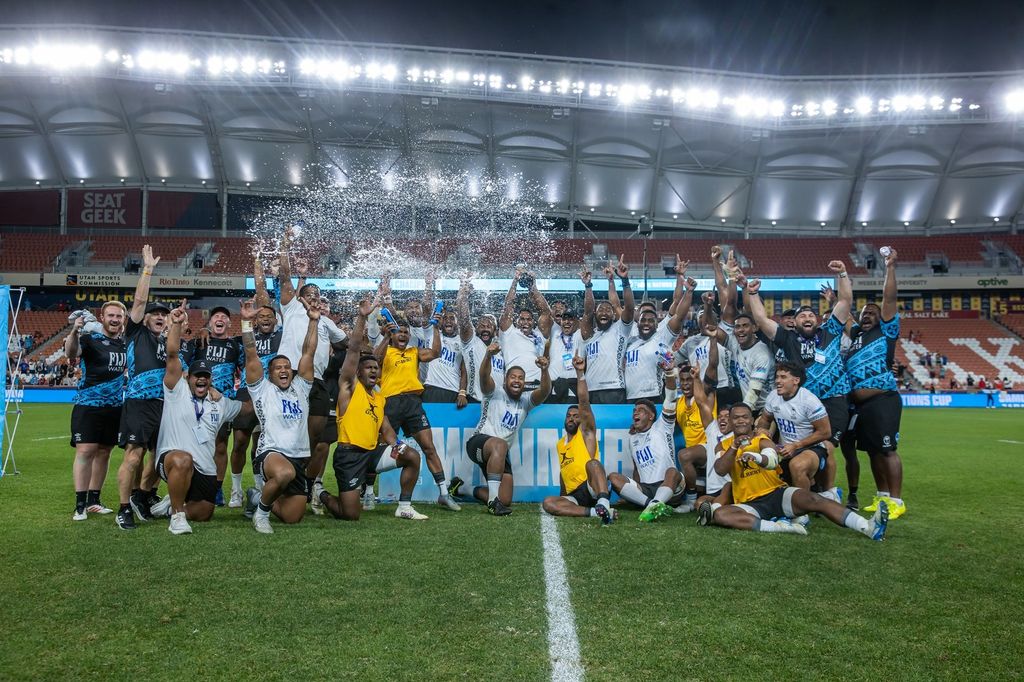
Did you know...? No side has won the Pacific Nations Cup more times than defending champions Fiji, who clinched their seventh title when they beat Japan 33-27 in last year’s final at America First Field in Salt Lake City, Utah, USA.
Current form
World Ranking: 9th
Form: LWLLL
Key team facts
Kit colour: White and black
Team logo: Palm tree
Nickname: Flying Fijians
Known for: Basketball-style skills, unpredictable and fast-paced rugby, humility and the cibi (pronounced ‘thimbi’), the pre-match cultural challenge that they have laid down on the rugby field since 1939.
Head coach: Senirusi Seruvakula
The Fiji Rugby Union announced in April that Seruvakula had been appointed on an interim basis after the governing body and former head coach Mick Byrne agreed to part ways.
Byrne stepped down from the role with immediate effect on 1 April, ending a tenure that included Fiji’s memorable run to the Rugby World Cup 2023 quarter-finals in France.
Seruvakula was unveiled as Byrne’s successor later that same day but Fiji have formally opened the recruitment process for a permanent head coach.
Seruvakula, meanwhile, will be assisted at the Pacific Nations Cup by David Ellis as interim defence coach and he brings more than 25 years of coaching experience into the role.
In brief
Fiji arrive in Japan on the back of a difficult start to their Nations Championship campaign in July, when they suffered three successive defeats at the hands of Wales, England and Scotland, leaving them bottom of the southern hemisphere standings.
But the Pacific Nations Cup often brings out the best in the Flying Fijians and they will be keen to retain the trophy they have won for the past two years.
The appointment of the vastly-experienced Ellis as interim defence coach appears shrewd and could hold the key to Fiji completing a hat-trick of titles. Ellis’ coaching career spans more than 1,000 professional matches at club level and further involvement in 200 tests, with a specialty in the defensive side of the game.
Known as the Harlem Globetrotters of rugby, Fiji play 15s as they do sevens, a format in which they have enjoyed such worldwide success, and they will not give up their crown as the most successful team in the Pacific lightly.
Key player: Terio Tamani
HSBC SVNS series star Tamani is among the seven uncapped players in Fiji’s squad which includes a mix of experience and emerging talent.
The scrum-half will look to play a pivotal role following a standout SVNS 2026 series.
Tamani earned a spot in the Men’s SVNS Dream Team of the Year in partnership with HSBC and will now look to showcase his talent on the 15s stage.
Legend: Rupeni Caucaunibuca
Caucaunibuca’s generosity in giving most of his riches from rugby away to those in need may have left him virtually destitute but his rich legacy lives on. His performances at Rugby World Cup 2003 catapulted him to superstardom, a blend of pace, power and balanced running leaving defenders in his wake. The fact he would go missing for weeks, if not months, on end, much to the frustration of multiple coaches, only added to his mystique.
Squad
The Flying Fijians have named a 33-man squad with seven players in line to make their international debut.
The uncapped players selected are Tamani, Penaia Cakobau, Vilikesa Nairau, Inoke Ravuiwasa, Isoa Tuwai, Maleli Nauvasi and Isaac Ratuimatavuki-Kneepkens.
Forwards: Livai Natave, Peni Ravai, Meli Tuni, Tevita Ikanivere, Kavaia Tagivetaua, Penaia Cakobau, Mesake Doge, Samu Tawake, Vilikesa Nairau, Inoke Ravuiwasa, Isoa Nasilasila, Mesake Vocevoce, Temo Mayanavanua, Joseva Tamani, Kitione Salawa, Motikiai Murray, Isoa Tuwai, Elia Canakaivata.
Backs: Frank Lomani, Sam Wye, Philip Baselala, Terio Tamani, Caleb Muntz, Isaiah Armstrong-Ravula, Kemu Valetini, Joji Nasova, Maleli Nauvasi, Manasa Mataele, Kalaveti Ravouvou, Tuidraki Samusamuvodre, Virimi Vakatawa, Isaac Ratuimatavuki-Kneepkens, Isikeli Rabitu.
Schedule
Semi-final vs Canada on Saturday, 12 September – Hanazono Rugby Stadium, Osaka
Final day vs Japan/USA on Saturday, September 19 – Prince Chichibu Memorial Stadium, Tokyo
They say
“The recent Nations Championship tour was my first as head coach and I have identified what our weaknesses are and how we can improve. I’ve also identified the players that should not be in the team and those that we have to bring into the team.
“It’s all a learning process. Every powerhouse team in the world was not always winning once and now they’re at the top. We always start somewhere and make our way up.” – Head coach Senirusi Seruvakula
