



One of those areas is the ‘hip drop’ tackle, where a tackler uses their bodyweight to pull a player to ground and drops onto the legs of a ball carrier from behind.
A recent example of this came in New Zealand’s win over Australia in Auckland in October, when All Blacks’ wing Leroy Carter suffered an ankle injury in the act of scoring a try under a hip drop tackle from Australia’s Rob Valetini. Carter ended up having surgery on a high-ankle injury, ruling him out of the northern hemisphere leg of New Zealand’s Nations Championship campaign.
The law amendment and a law application guideline in effect since 1 November means players can be sanctioned for ‘hip drop’ tackles, with officials looking at whether the tackler swings round or through the ball carrier, and also whether they also drop their bodyweight down onto the lower limbs of the ball carrier in order to bring them to ground.
Examples of ‘hip drop’ tackles remain rare, but given the potential for serious injury, they have now been added to foul play law (9.13).
Another tackle that was already punishable under the current laws, but has been reinforced going into November, is the ‘knee drop’ tackle, in which a tackling player drops a knee onto the ground before making a tackle on a ball-carrier.
The knock-on effects from a tackler being in that position in the first place are significant. The tackler’s head will be in a precariously low position, in line with the knee height of a ball carrier. Meanwhile, for the player running with the ball, having a tackler making contact from such a low position can cause them to flip onto the ground.
The physics involved in ‘knee drop’ tackles mean that both ball carrier and tackler are at risk of major injuries, hence a renewed focus in the coming weeks and beyond to cut down on similar offences.
By dropping to one knee making a tackle, defenders are therefore deemed to be off their feet and cannot make a tackle under Law 13 (Players on the ground in open play).
They can also be sanctioned under foul play law if the tackle is deemed to be reckless or dangerous. Input from the Television Match Official (TMO) for ‘knee drop’ tackles will only be required in the event of a dangerous outcome, for example a player landing on their head or flipping over.
Moving from tackle technique to the set-piece, there is also a renewed focus from officials during the pre-engagement process at the scrum around the brake foot, where the hooker must keep one foot forward flat on the ground in the tunnel during the “crouch” and “bind” phases before withdrawing it on “set”.
Officials will monitor whether any part of the hooker’s foot lifts off the ground during those initial phases, given the unfair advantage it can give a side engaging quicker at the scrum and to eliminate the risks that come with rushing the pre-engagement process.
Keeping the ‘brake foot’ in place helps prevent axial loading - where the hooker places their head or upper body against an opponent’s shoulder and bears the concentrated weight of their entire forward pack through their neck and cervical spine before the “set” call - and also improves the stability of both packs before the scrum engages.
There will also be a particular emphasis on ensuring that loosehead props are not ‘tucking the shoulder’ inwards before the “crouch” phase, given that - by removing a wider target for the opposition tighthead to find - teams have not been scrummaging straight, or binding early for stability, or penalised for head-on-head contact during the pre-engagement process.
Finally, in a revision to the head contact process, dangerous cleanout offences at breakdowns - when contact is made to the head of an opponent - will also be subject to a 20-minute red card, matching the punishment currently handed out for dangerous tackles.
The 20-minute red card means that a team can return to using 15 players once the 20-minute period has elapsed, with the guilty player who has been sent off unable to return to the field of play.
Permanent red cards, reserved for egregious acts of foul play, have become increasingly rare.
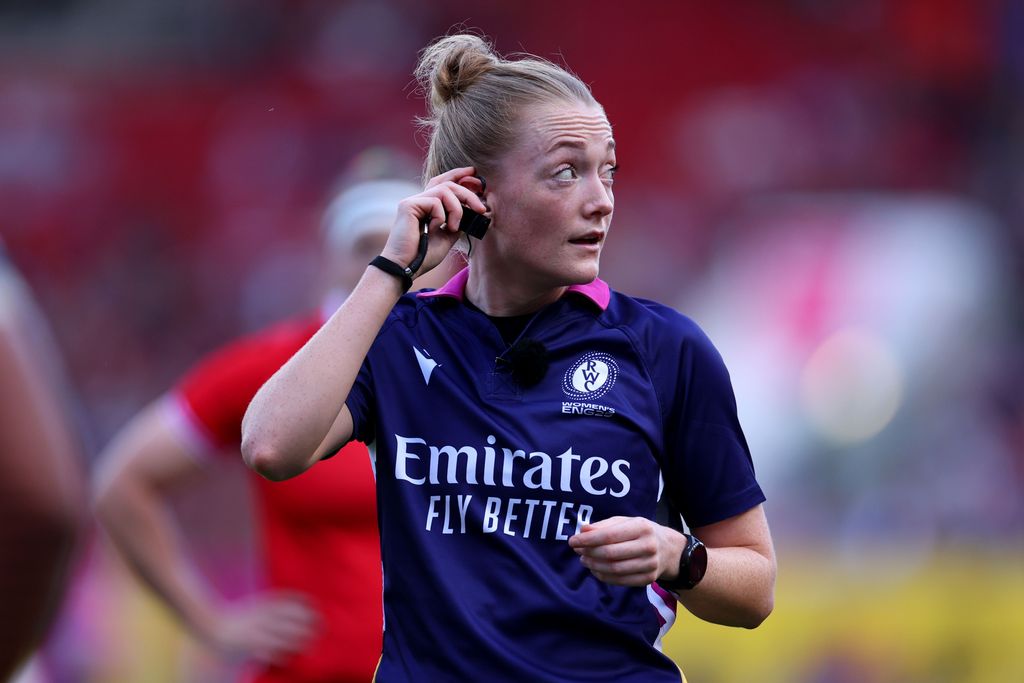
One recent example came in the Nations Championship in July, when Fiji’s Simione Kuruvoli was handed a permanent red card by referee Hollie Davidson after kicking out and making contact with the chest of England prop Ellis Genge.
The hope by introducing or reinforcing measures around the ‘hip drop’, ‘knee drop’, brake foot and dangerous cleanouts is that serious injuries can be prevented.
