


Sustainability / Legacy RWC 2025
Women’s Rugby World Cup 2025 left a powerful legacy for England and the global game
A resounding success at home: record crowds, economic impact and social purpose
Hosted across eight host locations (Brighton, Bristol, Exeter, London, Manchester, Northampton, Sunderland and York), Women’s Rugby World Cup 2025 delivered exceptional results across every metric of success.
These achievements were matched by outstanding fan and player satisfaction. The tournament recorded a Net Promoter Score of +84, placing it above many other major global sporting events and underscoring the worldclass experience delivered to supporters. Players mirrored this sentiment, with 82 percent rating their overall tournament experience as good or excellent, reflecting the high standards set across performance environments, welfare provision and event delivery.
Beyond the numbers, England 2025 championed a bold social purpose. The ‘Where We Belong’ campaign delivered powerful messaging around body confidence, inclusion, and the idea that women and girls not only belong in rugby but can thrive in every part of the sport: on the field, on the sidelines, and in leadership.
The tournament left its mark on spectators attending in the stands, with 96 percent of them describing the event as inspiring. Out of the 44 percent of fans who had never been to a women rugby match before RWC 2025, 94 percent said they intended to watch women’s rugby in the future.
The social impact was profound. Seventy five percent of women aged 13–25 reported feeling more motivated to be active after engaging with the tournament; thousands of volunteers, including many first timers, helped deliver a welcoming, accessible tournament atmosphere. These results reflect a tournament that not only broke records, but broke barriers: redefining visibility, representation and cultural relevance for women’s rugby.
Behind the spectacle: unprecedented reach, growing audiences and a new generation of fans
Women’s Rugby World Cup 2025 also resonated at a scale never achieved in the women’s game. The event reached new audiences internationally, fuelled by enhanced production, free-to-air coverage in key markets and an innovative digital strategy designed to showcase players’ stories and personalities. The tournament achieved 147 million global broadcast viewing hours (a 336 percent increase compared with Women’s RWC 2021) demonstrating the soaring worldwide interest in women’s rugby and the effectiveness of the tournament’s accessibility driven broadcast approach.
This broadcast success was amplified by exceptional digital impact. Women’s RWC 2025 generated more than one billion social media impressions, elevating players into global cultural icons and creating a substantial new addressable audience for the women’s game. Shortform content, platforms partnerships with Snap and TikTok, creator collaborations and player led storytelling played a pivotal role in expanding rugby’s footprint across younger demographics, driving record engagement, and bringing the sport into new markets and communities. These results underline how England 2025 not only thrilled fans inside stadiums but captured the imagination of millions around the world, cementing its status as a breakout moment for the sport.
Alongside its sporting and social achievements, Women’s Rugby World Cup 2025 also delivered exceptional commercial value, underlining the tournament’s growing appeal to major global brands. The event generated £201 million in media value for Rugby World Cup commercial partners, reflecting the unprecedented broadcast reach, digital visibility and on‑site engagement opportunities unlocked throughout the tournament.
This commercial momentum translated into a 330 percent increase in sponsorship revenues compared with the previous edition, attracting a wider portfolio of fan‑facing, purpose‑aligned brands eager to invest in the women’s game. Their activations, from immersive fan experiences to high‑impact digital campaigns, not only enhanced the tournament atmosphere but also reinforced the compelling proposition that Women’s Rugby World Cup now represents for partners, host cities and investors alike.
View the Women’s RWC 2025 Impact Report >>
A global influence: Impact Beyond 2025 delivers worldwide progress
In parallel with the local legacy, World Rugby’s Impact Beyond 2025 programme ensured the tournament’s influence extended far beyond England. Designed as a multi‑year global strategy, the programme partnered with unions and regional associations worldwide to deliver practical, scalable initiatives spanning participation, leadership, coaching, officiating, mental health, digital growth and women’s health.
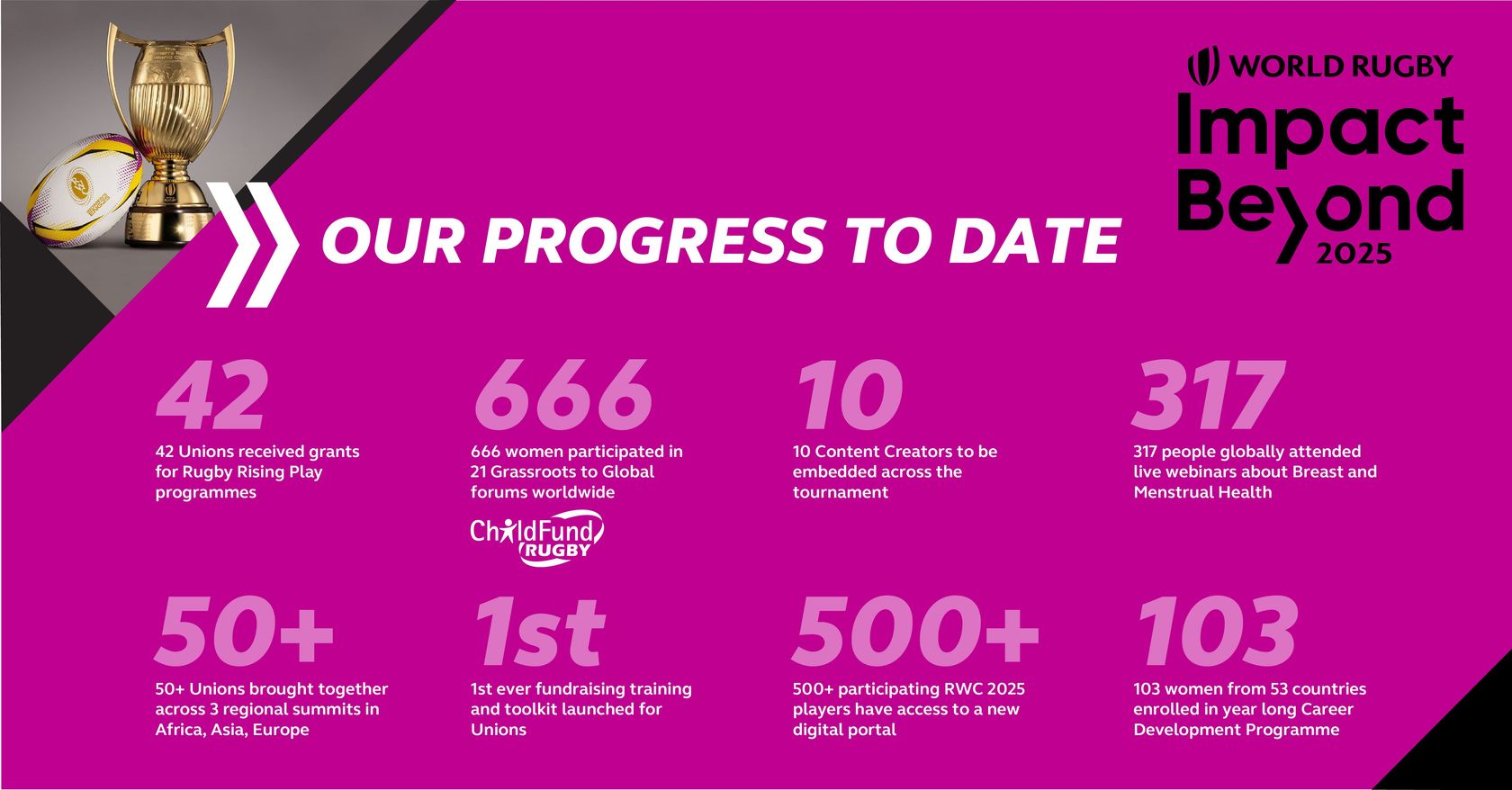
Central to this effort was a dramatic expansion of opportunities for women and girls: more than 35,500 teenage girls took up rugby through Rugby Rising play grants delivered in 42 unions, including emerging rugby nations such as Laos, Nigeria, Bosnia & Herzegovina and the Cook Islands.
Impact Beyond also invested heavily in capability building, with over 100 women from 56 countries enrolling on the Careers programme and reporting strong increases in confidence, professional networks and awareness of rugby focused career pathways. In high performance areas, the Gallagher High Performance Academy supported 47 female coaches, contributing to a record 32 percent representation of female coaches at the tournament (up from 15% in 2021).
The programme also advanced player welfare and safeguarding in unprecedented ways. This included the most comprehensive mental health support ever implemented at a Rugby World Cup, supported by a pioneering network of 37 former internationals who provided confidential peer-to-peer guidance to teams and match officials. In the digital space, World Rugby’s social media protection service analysed over 440,000 posts and reporting 1,189 abusive posts or comments to the platforms, creating a safer environment for players and match officials and setting a new standard for athlete protection in women’s sport.
At union level, Impact Beyond 2025 strengthened long term foundations for growth. More than 50 unions were upskilled through regional summits across Africa, Asia and Europe, and over 90 unions benefitted from World Rugby’s first ever fundraising training programme, enabling them to unlock new sources of funding to grow the game. Meanwhile, more than 1,000 women leaders participated in the ChildFund Rugby Grassroots to Global series, developing action plans to grow female participation and leadership within their own communities.
Taken together, the Impact Beyond 2025 results show the emergence of a stronger, more connected women’s rugby ecosystem; one that positions unions worldwide to capitalise on the rising global demand for women’s sport.
View the Impact Beyond 2025 Global Impact Report >>
Unified legacy: a tournament that changed the game
By publishing the two reports together, World Rugby has underlined a single, cohesive message: Women’s Rugby World Cup 2025 was both an iconic event and a global development engine.
The local and global legacies reinforce one another. High profile, record-breaking events elevate the sport’s visibility and commercial value; development programmes ensure that visibility translates into genuine growth across participation, pathways, and capabilities worldwide.
It is a model that World Rugby intends to build on through the next cycle of pinnacle events with Men’s Rugby World Cup 2027 and Women’s RWC 2029 in Australia, Men’s RWC 2031 and Women’s RWC 2033 in the USA.
Women’s rugby is experiencing rapid growth in audiences, participation, commercial interest and cultural influence and World Rugby is committed to ensuring that this moment becomes a movement. With strategic investment such as the WXV Global Series, strengthened pathways and a global community energised by the success of 2025, the women’s game is entering a new era. The lessons and legacies captured in these two reports will guide the sport as it accelerates towards Women’s Rugby World Cup 2029 and beyond.
Purposeful decisions to minimise environmental impact
Women's Rugby World Cup 2025 set out to demonstrate that major sporting events can reduce their environmental impact while delivering an exceptional experience for players, fans and communities.
From the earliest stages of planning, sustainability was not treated as a standalone programme. It was woven into tournament delivery, influencing decisions across travel, procurement, venue operations, energy and legacy initiatives. The result was a series of practical actions that reduced emissions, encouraged more responsible resource use and created benefits that will continue long after the final whistle.
Embedding sustainability from day one
Meaningful change starts with how decisions are made.
Eighteen months before the tournament, an organisation-wide Sustainability Task Force brought together every functional area of delivery, ensuring environmental considerations were included across operations, logistics, venues, workforce planning and procurement. Rather than sitting on the sidelines as a specialist topic, sustainability became a shared responsibility across teams.
This approach helped create a culture of accountability, innovation and collaboration, while giving staff, volunteers and partners the knowledge and confidence to contribute to the tournament's environmental ambitions.
Reducing carbon emissions through smarter travel
Travel is often one of the biggest contributors to the environmental footprint of major events. Women's Rugby World Cup 2025 tackled this challenge through careful planning and a clear commitment to lower-carbon transport.
A "train-first" policy guided domestic travel for tournament staff, officials and guests, leading to more than 3,100 rail journeys and an estimated saving of around 110 tonnes of CO₂e compared with equivalent car travel.
That philosophy extended to the fan experience. Working with national and local transport partners, the tournament prioritised public transport and active travel options across all host cities. As a result, 56 per cent of fans travelled using sustainable modes of transport, while 83 per cent of volunteers chose to travel by train, bus, cycling or walking.
By making sustainable travel convenient and accessible, the tournament showed that reducing emissions can go hand in hand with delivering a positive match-day experience.
Finding smarter ways to power the game
Innovation played a key role in reducing emissions behind the scenes.
Working closely with Aggreko and Host Broadcast Services, Women's Rugby World Cup 2025 challenged traditional approaches to temporary event power. Through greater use of existing venue infrastructure, careful energy planning and sustainable fuels, emissions linked to broadcast technical power were reduced by 92 per cent, avoiding approximately 260 tonnes of CO₂e.
One of the tournament's most significant achievements came in Brighton, where broadcast operations at a match venue were powered primarily through the electricity grid rather than generators, a first for a Rugby World Cup stadium environment.
These innovations demonstrated how collaboration and early planning can deliver operational reliability while significantly lowering environmental impact.
Getting more from every resource
Sustainability is not only about reducing emissions. It is also about making better use of materials and resources.
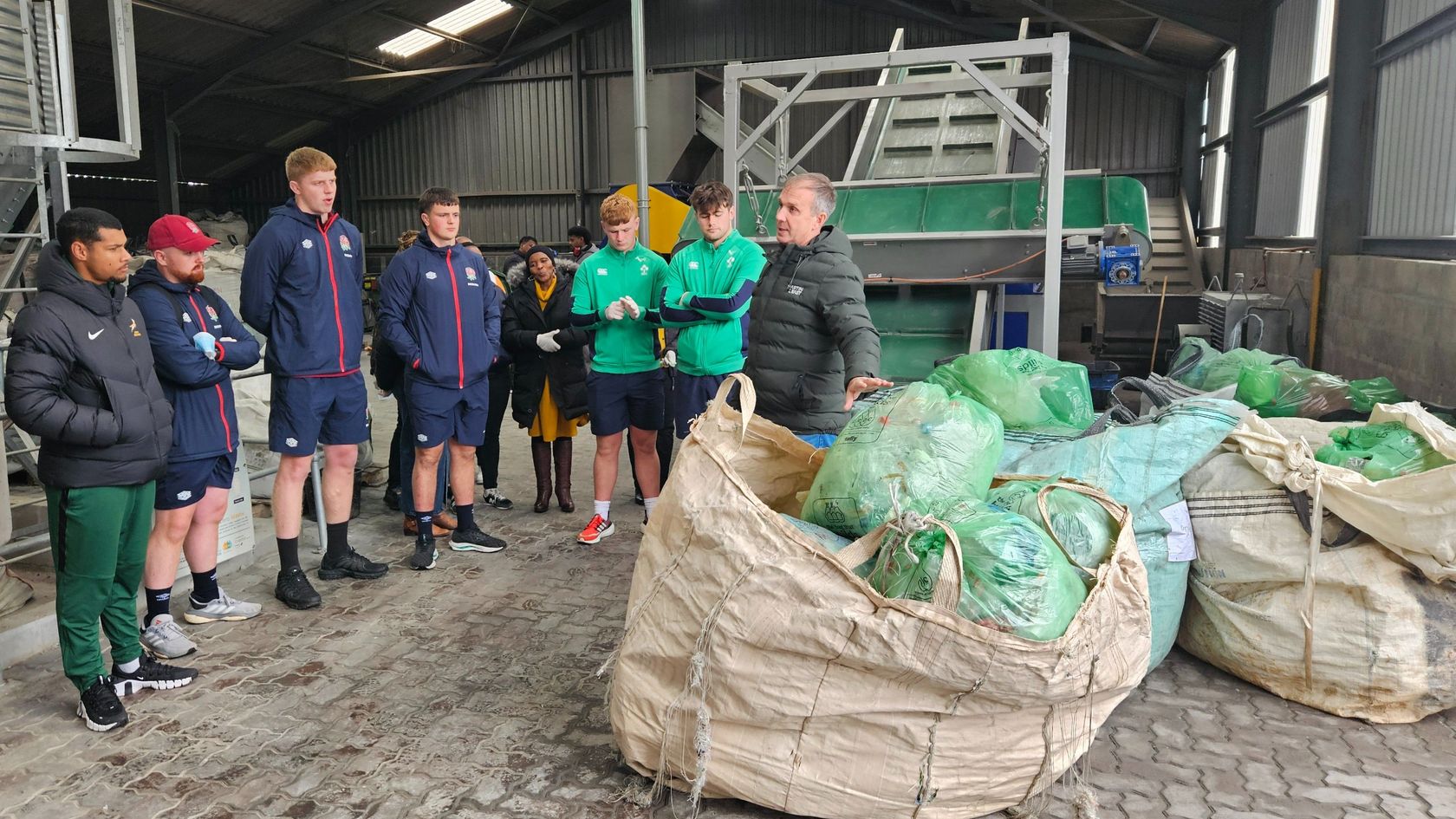
Through an early Asset Dissolution Strategy, the tournament prioritised renting, reusing, redistributing and recycling equipment wherever possible. Eighty per cent of tournament assets were rented and 95 per cent had a defined end-of-life pathway, helping to avoid waste and maximise resource value.
Equipment found new homes across rugby and the wider sporting community, with assets redistributed to clubs, unions, community organisations and future events. Volunteer uniforms were donated to support community sport programmes, extending the impact of the tournament beyond the competition itself.
The same thinking shaped tournament branding. At Exeter, a pilot project transformed branding assets into air-purifying surfaces using innovative photocatalytic technology. At the same time, all branding materials were produced using non-PVC materials and more than three tonnes of material were recovered and repurposed after use.
Working with suppliers to drive change
The tournament's environmental impact extended far beyond its own operations.
By embedding sustainability into procurement and supplier engagement, Women's Rugby World Cup 2025 encouraged partners to develop innovative solutions that reduced waste, cut transport emissions and increased reuse. Over half of suppliers were located within 20 miles of key tournament locations, while many adopted low-carbon logistics, reusable infrastructure and circular material practices.
From foldable retail units and battery-powered retail operations to reusable event structures and digital-first hospitality experiences, suppliers helped show how sustainability can be integrated throughout an event supply chain.
Creating a legacy beyond the tournament
Some of the most meaningful impacts will continue long after Women's Rugby World Cup 2025.
Through a £90,000 venue grants programme, host venues invested in practical improvements including water refill stations, LED lighting, electric vehicle charging points, smart energy management systems and electric heating solutions. Many venues further increased the impact through additional match funding.
In Brighton & Hove, the tournament also supported biodiversity projects that planted 16 trees, one for each participating nation, while engaging local communities through nature-focused activities. These initiatives contribute to habitat restoration, climate resilience and greater awareness of the role sport can play in protecting nature.
Building a blueprint for the future
Women's Rugby World Cup 2025 showed that environmental sustainability is not achieved through a single initiative. It comes from hundreds of deliberate decisions made throughout the planning and delivery of an event.
By bringing together governance, innovation, collaboration and legacy planning, the tournament demonstrated how major sporting events can reduce their environmental footprint while creating lasting value for communities and the wider game. The learnings from England 2025 will not only shape future Rugby World Cups, but help strengthen the role of sport in building a more sustainable future